

Water Meter Still Spinning With the Main Off? What That Rules Out
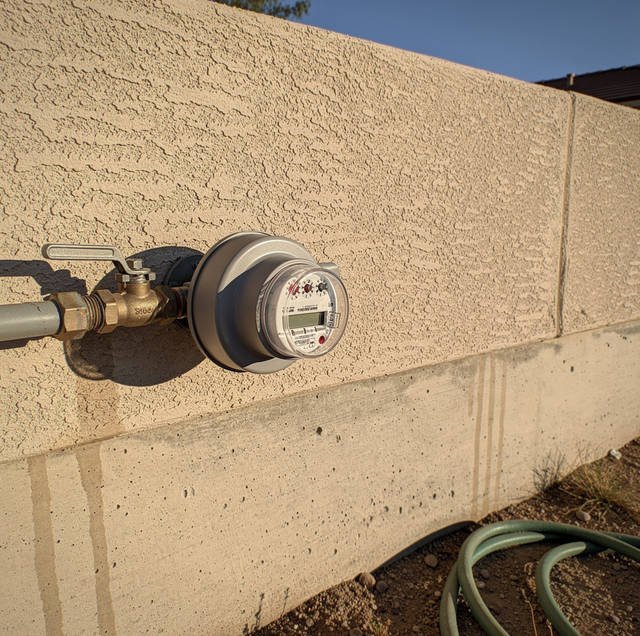
Quick Answer: If your main house valve is fully closed and the meter still turns, the loss is upstream of that valve: the buried service line or anything teed off it before reaching the house, provided the valve is actually seating fully.
You have both hands on the shutoff valve where the line enters your house, and you have already turned it as far as it goes; there is no more give in the handle. Behind you, out past the driveway, the meter has not caught up to that decision. The dial is still moving, slow and steady, the same as it was five minutes ago before you touched anything.
That one detail changes the question you are asking. A meter that keeps turning after every fixture, appliance, and tap inside the house has been cut off by that valve does not mean a leak exists somewhere in general. It tells you where a leak cannot be and, by elimination, roughly where it has to be instead. That is worth understanding on its own terms before you make the next call.
What Closing the House Valve Just Ruled Out
The shutoff valve where the service line enters your house controls everything on the building side. Close it fully, and no water can reach a single fixture downstream: not a toilet flapper that never quite seats, not a washing machine hose, not a slow drip under a bathroom sink, not the water heater, not an icemaker line running behind a refrigerator. All of it goes dead the moment that valve seats.
So if the meter is still turning with that valve closed, none of those things can be the source. You have just cleared the entire interior of your home in one action, which is a bigger elimination than it sounds like from where you are standing. Whatever is moving water past the meter has nothing to do with a fixture, an appliance, or anything a plumber would find by walking through your rooms.
What's Left Between the Meter and the Valve
A water meter has one job: it counts everything that passes through it, regardless of where that water is ultimately headed. Your house valve, by contrast, only gates one specific point on that path. Everything upstream of the valve is outside its reach, which means a leak sitting in that stretch keeps running exactly as it was before you touched the handle.
That stretch is not empty pipe waiting to enter your house. Depending on how your property is laid out, it can carry more than one thing:
The buried service line itself: The run connecting the meter to the point where water reaches your house, where a separated joint or a corroded section can lose water into the surrounding ground for a long time before anything about it is obvious from the surface.
An irrigation or drip-system take-off: On many properties, the yard's watering system is tapped into this run before the water ever reaches the house valve, which puts its own zone valves and controller entirely outside anything that valve touches.
A hose bib or a detached structure fed off the same leg: An exterior spigot mounted on that stretch, or a casita, workshop, or pool equipment room plumbed in ahead of the house valve, draws from the identical run and keeps drawing no matter how firmly that valve is closed.
Why This Leak Doesn't Announce Itself
A leak inside your home usually leaves a trail: a stain spreading across a ceiling, a swollen cabinet floor, a damp patch that shows up where you can see it. A leak in the run between the meter and the valve has none of that working in its favor. It is happening underground, outside the structure, where water can travel through soil for a long stretch before it ever reaches a surface you would notice, if it reaches one at all.
That is the practical difference this test result draws for you. You are not looking for a wet spot indoors anymore, because the test already told you there will not be one from this source. What you have confirmed instead is that the loss is occurring somewhere along a run you cannot see and never could see just by walking the property, which is exactly why a result like this changes what the next call needs to be about.
What This Result Means for the Next Call
Because the loss sits outside the house in a buried run, finding the exact point along it takes different equipment than finding a leak inside conditioned space. A dedicated detection specialist brings that equipment to trace where along the run the water is actually escaping, working from the meter side toward the valve, or from a branch line back toward the point it splits off. Once that point is marked, the plumbing side of the job- opening the section, making the repair, and closing it back up- is work for the licensed contractor.
You do not need to identify which of the three possibilities above is the actual cause before you call. That distinction is exactly what tracing the line is for. None of what you have done tells you where the water is going, only where it has already been ruled out, and that is still real progress. What matters is describing the test as you ran it: main valve closed, meter still moving. That one sentence tells whoever answers the phone which side of the property to start on, before anyone opens a wall or crosses a foot of yard they did not need to.
Frequently Asked Questions
It tells you something, but not whether there is a leak. Many meters carry two indicators: the main register, which sweeps with actual volume, and a small triangular or star-shaped low-flow indicator that turns even when the flow is too small to move the main dial. A slowly rotating low-flow indicator with the house valve closed still confirms an active loss in that isolated stretch, just a smaller one than a fast-spinning main register would suggest.
Yes. An older or worn shutoff valve can fail to close completely and still pass a slow trickle downstream, which would move the meter even if nothing is actually wrong with the buried run itself. A valve that turns without ever hitting a firm, definite stop is worth mentioning when you describe what you found, since it changes where the problem might actually be.
It can, and there is a way to separate the two. An irrigation take-off ahead of the house valve almost always carries an isolation valve of its own, either right at the tap point or inside the first valve box on that leg. Closing that valve as well and then re-reading the meter is the single test that distinguishes a loss on the watering branch from a loss in the service line itself, and it is a distinction the house valve alone can never make.
Not necessarily. On some properties the run is exposed for a short stretch: at the stub-up where the line comes through the slab at the garage wall, or inside a sleeve where it passes under a driveway. A short section like that is reachable without opening ground, which changes how the repair gets made once the point is found.
It can raise them. Trenching for a new fence line, a post hole dug for landscaping, or grading work done near the meter run are common ways this specific stretch of pipe gets nicked without anyone realizing it at the time. If work like that happened recently anywhere between your meter and the house, it is worth mentioning.
Sometimes. Many properties have a second shutoff nearer the meter: a curb stop in or beside the meter box, which belongs to the utility and is not a homeowner's to operate, or an owner-installed ball valve set just past the meter on the private side. Where that private valve exists, closing it isolates a far shorter length of pipe than the house valve does, and a meter that keeps turning even then narrows the loss to the short stretch between the meter and that valve rather than the whole buried run.
Call with that one result in hand — get the buried run traced and repaired without opening anything the test has already ruled out. American Discount Plumbing serves Phoenix and Scottsdale. ROC #150707. Call (602) 883-2787.
