

Tankless vs. Tank Water Heater: Which Wins for Your Home?
Quick Answer: A storage tank heats and holds 40 to 50 gallons of hot water around the clock, so it delivers a big burst instantly but can run out during heavy use. A tankless unit heats water only as it flows, giving continuous hot water but capping how many fixtures can run at once. Tanks cost less to install and suit most households; tankless suits smaller footprints, longer service life, and homes that never want to wait out a reheat.
Replacing a water heater is a decision most homeowners make once or twice in a lifetime, usually in a hurry after the old unit quits. The choice between a storage tank and a tankless unit shapes your hot water, your utility bill, and your maintenance calendar for the next decade or more. Getting it right the first time beats living with the wrong fit until the next failure.
How Each Type Actually Works
The two designs solve the same problem in opposite ways, and the difference explains almost every trade-off that follows.
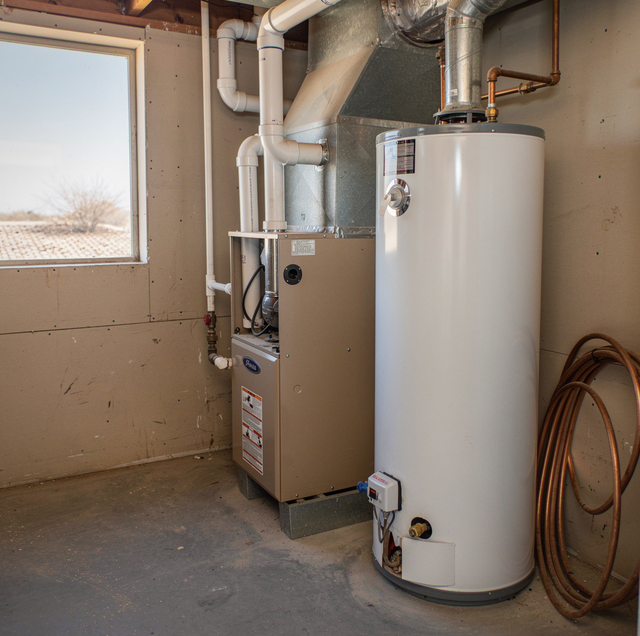
The storage tank: A conventional heater keeps a large insulated cylinder full of hot water, reheating it whenever the temperature drops below the thermostat setting. A gas burner underneath or an electric element inside holds the whole volume ready, day and night, so hot water is available the instant you open a tap. When you drain the tank faster than it can reheat, you get cold water until the burner catches up.
The tankless (on-demand) unit: A tankless heater has no reservoir. When a hot tap opens, a flow sensor fires a powerful gas burner or bank of electric elements that heats water as it passes through a heat exchanger. Water leaves at the set temperature for as long as the tap runs, which is where the "endless hot water" reputation comes from. Close the tap and the unit shuts off, using no energy until the next call for hot water.
That single structural difference, a stored reservoir versus instant heating, drives the decision points below.
The Real Decision Drivers
Endless Hot Water vs a Finite Supply: A tankless unit will not run out mid-shower, since it heats continuously. A tank holds a fixed amount; back-to-back showers, a full bath, and a dishwasher cycle can empty it. Once drained, a tank needs recovery time to reheat before it delivers full-temperature water again. Households that regularly exhaust a tank feel this limit the most.
Flow Rate and Simultaneous Fixtures: Endless does not mean unlimited. A tankless unit is rated in gallons per minute (GPM), and it can only raise incoming water to the target temperature up to that flow ceiling. Run a shower, the kitchen sink, and a washing machine together, and a single undersized unit can fall behind, dropping the outlet temperature. Sizing matters: a plumber adds up the GPM of the fixtures likely to run at once and factors in how cold the incoming water is, because colder inlet water lowers the achievable flow. Larger homes sometimes need a higher-capacity model or two units to cover peak demand. A tank sidesteps this by dumping its whole stored volume at once, then paying for it with recovery time afterward.
Endless does not mean unlimited on a tankless unit. Before you buy, have a plumber add up the GPM of the fixtures likely to run at once and factor in how cold the incoming water is, since colder inlet water lowers the flow the unit can heat. An undersized single unit falls behind when a shower, a sink, and a washer all run together.
Footprint and Space: A tank is a floor-standing cylinder, often several feet tall, that occupies a closet, garage corner, or utility space. A tankless unit is roughly the size of a carry-on suitcase and hangs on a wall, freeing the floor and opening up storage. In a tight home, that reclaimed space is a real advantage.
Lifespan: A tankless unit typically outlasts a tank, often reaching 15 to 20 years against a tank's 8 to 12 years, partly because individual parts can be replaced rather than the whole appliance, and partly because it is not holding standing water that corrodes the vessel over time. A longer service life offsets some of the higher purchase and installation cost across the unit's life.
Energy Use and Standby Loss: A tank reheats its stored water whenever it cools, even when no one is home, which is the standby loss that runs quietly in the background. A tankless unit spends nothing between draws. Homes with lighter or intermittent hot water use tend to see the biggest efficiency gain from going tankless, while very heavy continuous use narrows the gap.
Install Complexity: This is where tankless surprises people. Because the burner or elements fire hard and fast, a gas tankless unit often needs a larger gas line, its own sealed venting, and sometimes a nearby condensate drain. An electric tankless unit can demand a substantial service upgrade, since it draws far more current than an electric tank. Swapping a tank for a tank is usually simpler; converting to tankless can mean gas, venting, and electrical work that a licensed plumber has to plan around your existing system. That upfront work is a meaningful part of the cost difference.
Hard Water, Scale, and Maintenance: Mineral-heavy water leaves scale wherever it is heated. In a tank, sediment settles at the bottom and is managed by periodic flushing. In a tankless unit, scale builds inside the narrow heat exchanger, and if left alone, it restricts flow, cuts efficiency, and shortens the unit's life. Tankless owners in hard-water conditions should plan on descaling roughly once a year, and many pair the unit with a water softener or a dedicated scale filter to slow buildup. A tank tolerates hard water with less fuss, though it still benefits from a yearly flush. Factor this ongoing upkeep into any tankless decision.
Recovery Time on Tanks: Recovery is the rate a tank reheats after heavy use. Gas tanks generally recover faster than electric ones. A slow-recovering tank in a busy household can feel like it "runs out" often, when the real issue is that it cannot reheat quickly enough between draws. Sizing the tank to the household, or choosing a higher-recovery model, matters as much as the raw gallon rating.
Matching the Unit to Your Household
The right answer follows your usage pattern more than any single spec.
A tankless unit tends to win when hot water use is spread out rather than all at once, when floor space is tight, when you want the longest service life, or when you are tired of anyone running out during a busy morning, and you are prepared for the descaling routine.
A tank tends to win when several fixtures routinely run at the same time, when a simpler and lower-cost install matters, when the existing gas and electrical service already suits a tank, or when you would rather flush once a year than manage a stricter descaling schedule.
Think of it like a reservoir behind a dam versus a fire hose fed straight from the main. The reservoir gives you a large amount on demand but empties and needs time to refill; the hose never empties but only pushes so much through at any moment. Neither is better in the abstract; the winner is the one that matches how your home draws water.
A note on safety: A water heater install is not a DIY project. Gas and venting work carries a carbon monoxide risk if done wrong, electric conversions involve high-current wiring, and every unit needs a correctly rated temperature and pressure (T&P) relief valve to prevent dangerous pressure buildup. Setting the temperature too high also creates a scalding hazard. This is licensed plumber territory for good reason.
A water heater install is not a do-it-yourself project. Gas and venting work carries a carbon monoxide risk if done wrong, electric conversions involve high-current wiring, and every unit needs a correctly rated temperature and pressure relief valve to prevent dangerous pressure buildup. Setting the temperature too high also creates a scalding hazard.
The Recommendation
For most households replacing a heater that has served them fine, a properly sized storage tank remains the sensible, lower-cost, lower-maintenance choice. Move to tankless when the specific advantages earn it: you want continuous hot water, you need the floor space back, you value the longer lifespan, or your usage is intermittent enough to reward the efficiency, and you accept the added install work and the descaling upkeep that come with it. The best decision is made with a plumber who has sized both options against your actual fixtures, your incoming water, and your existing gas and electrical service.
Frequently Asked Questions
Sometimes, but not always. Tankless units mount on a wall and need proper clearances, dedicated venting that routes to the outside, and access to an adequately sized gas line or electrical circuit. A garage or closet that fits a floor-standing tank may still need venting rerouted or a gas line resized before a tankless unit can go in the same corner.
No. Even a gas tankless unit relies on electronic ignition, the flow sensor, and control board, so it will not fire without power. A gas storage tank with a standing pilot can keep delivering already-heated water briefly during an outage, which is one reason some homeowners in outage-prone areas keep a tank.
It is a brief slug of cool water that arrives when you open a tap shortly after someone else just closed one. The leftover hot water in the line reaches you first, followed by a short cold stretch while the burner refires and reheats, then hot again. A small buffer tank or recirculation setup can reduce it.
For a typical residential tank, expect roughly 20 to 60 minutes for a full recovery, depending on whether it is gas or electric and the size of the burner or element. Gas units generally recover faster. This recovery window is exactly what a tankless unit eliminates.
Yes, meaningfully. Softening or a dedicated scale filter reduces the mineral content that would otherwise deposit inside the heat exchanger. Less scale means the burner works less to hit temperature, flow stays closer to rated GPM, and annual descaling goes quicker. It is one of the most effective ways to protect a tankless investment in mineral-heavy water.
It is. A heat pump (hybrid) model is a storage tank that pulls heat from surrounding air instead of generating it directly, using far less electricity than a standard electric tank. It needs enough surrounding air volume and clearance to work well and runs cooler and slightly noisier, but for an all-electric home it often beats both a standard electric tank and an electric tankless unit on operating cost.
Not sure which water heater fits your home — get a straight recommendation sized to your fixtures, water, and hookups. American Discount Plumbing serves Phoenix, Scottsdale, and the Valley. ROC #150707. Call (602) 883-2787.
