



American Discount Plumbing vs. the big water-treatment sellers
Phoenix Water Realities That Drive Treatment
Treating water is local by nature, and the Valley has a distinct profile. Here is what shapes the right system.
14 to 18 grains per gallon, among the hardest anywhere
Phoenix water consistently tests in the very hard range, which is why scale problems here are worse than in most of the country. This is the core fact behind everything on this page, and it is why treatment is closer to basic home protection than a luxury in the Valley.
Different source blends across the Valley
Phoenix draws from a mix of Colorado River water through the Central Arizona Project and Salt River Project supplies, and the blend, hardness, and mineral content vary by area and season. That means the right system and sizing for one neighborhood is not automatically right for another, so we tailor the recommendation to your part of the Valley.
Chlorine and chloramine and what removes them
Valley water is treated with disinfectants, and some areas use chloramine, which behaves differently from chlorine and affects taste and rubber components. Carbon filtration is what addresses these, and whether you need it depends on your water and your priorities, which we will assess rather than assume.
Hard water is what kills your water heater early
The same minerals this page is about are the number one reason Valley water heaters fail before their rated life. Pairing softening with a water heater is one of the highest-return moves a homeowner can make here, which is why our water-heater and treatment work go hand in hand.
Salt and wastewater concerns favor salt-free
Salt-based softeners discharge brine, and salinity in regional wastewater is a recognized concern in Arizona, with rules that vary by area. It is part of why we generally lean salt-free for the Valley. We keep an eye on local requirements so your system fits both your home and the rules where you live.
Well water in Cave Creek and Carefree
Parts of Cave Creek, Carefree, and other outlying areas are on well water, which can bring its own hardness, iron, and other issues that city water does not. Treating well water takes a different assessment, and we know what to test for and how to address it.
Snowbird homes and systems left on bypass
In seasonal homes, water treatment systems are sometimes left on bypass or unmaintained for months, which defeats their purpose and can let the unit foul. We help seasonal owners set up and maintain their systems so the protection is actually there when they return.
The Water Treatment Details Worth Understanding
Water treatment is full of marketing claims. Here is the simple version from decades of working on Valley water.
What grains per gallon actually means
Hardness is measured in grains per gallon, and anything above about 10 is considered very hard. Phoenix at 14 to 18 is well into that range, which is why scale forms so quickly here. Knowing your specific number matters, because it determines the size and type of system that will actually keep up with your household.
Ion-exchange softeners vs. salt-free conditioners
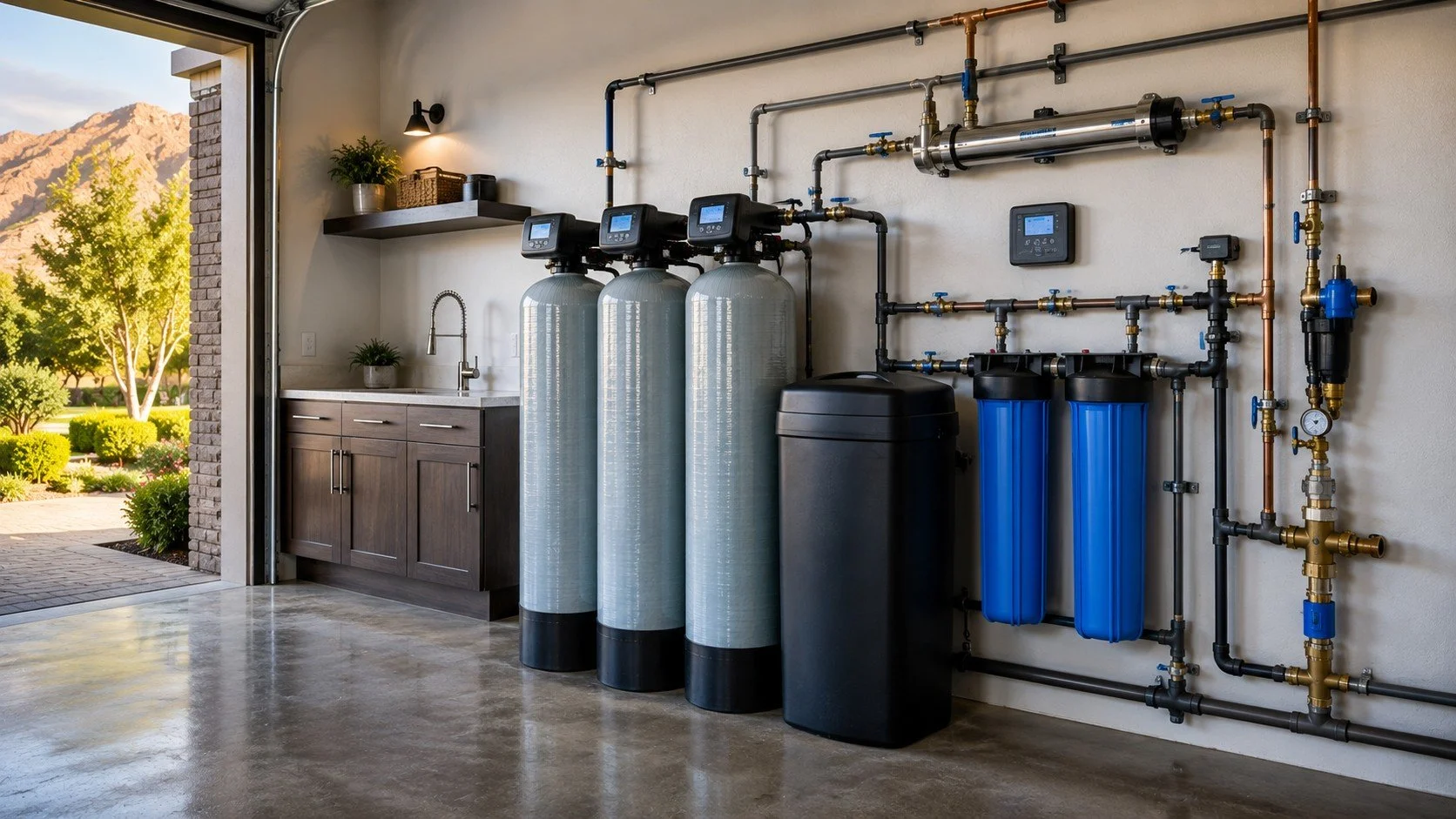
A traditional softener uses ion exchange, swapping hardness minerals for sodium on a resin bed that regenerates with salt. A salt-free conditioner instead changes the minerals so they do not stick and scale, without removing them or adding sodium. Each has a place: true softening for the hardest water and heaviest scale, conditioning for convenience and no salt. We match the technology to your water.
Carbon filtration for chlorine and chloramine
Carbon media adsorbs chlorine, chloramine, and the compounds that affect taste and odor. Chloramine in particular needs the right type and amount of carbon to address, which is a detail a packaged-system seller may not size correctly. Whether you need carbon at all depends on your water and what bothers you.
The role of a sediment pre-filter
A sediment pre-filter catches grit and particulates before they reach the softener or the rest of your plumbing, protecting the more expensive equipment downstream. We install one with the system as standard because it is cheap insurance that extends the life of everything after it.
Whole-home treatment vs. point-of-use RO
Whole-home treatment protects every pipe, fixture, and appliance in the house, while reverse osmosis at the kitchen sink polishes water for drinking and cooking. They do different jobs, and many Valley homes use both: softening for protection, RO for the best-tasting drinking water. See our reverse osmosis page for that side.
Sizing the system to your home
An undersized system cannot keep up with peak demand and lets hard water slip through, while an oversized one is money wasted. Correct sizing comes from your hardness level and your household's water use, not a one-size package. Getting this right is the difference between a system that quietly works and one that disappoints.
Maintenance that keeps it working
Every system needs upkeep: cartridges replaced about yearly, salt added on a schedule for salt-based units, and periodic checks. A system that is not maintained slowly stops protecting your home. We set up a realistic schedule and are here for the annual service so your investment keeps paying off.
Water Treatment and Softener FAQs
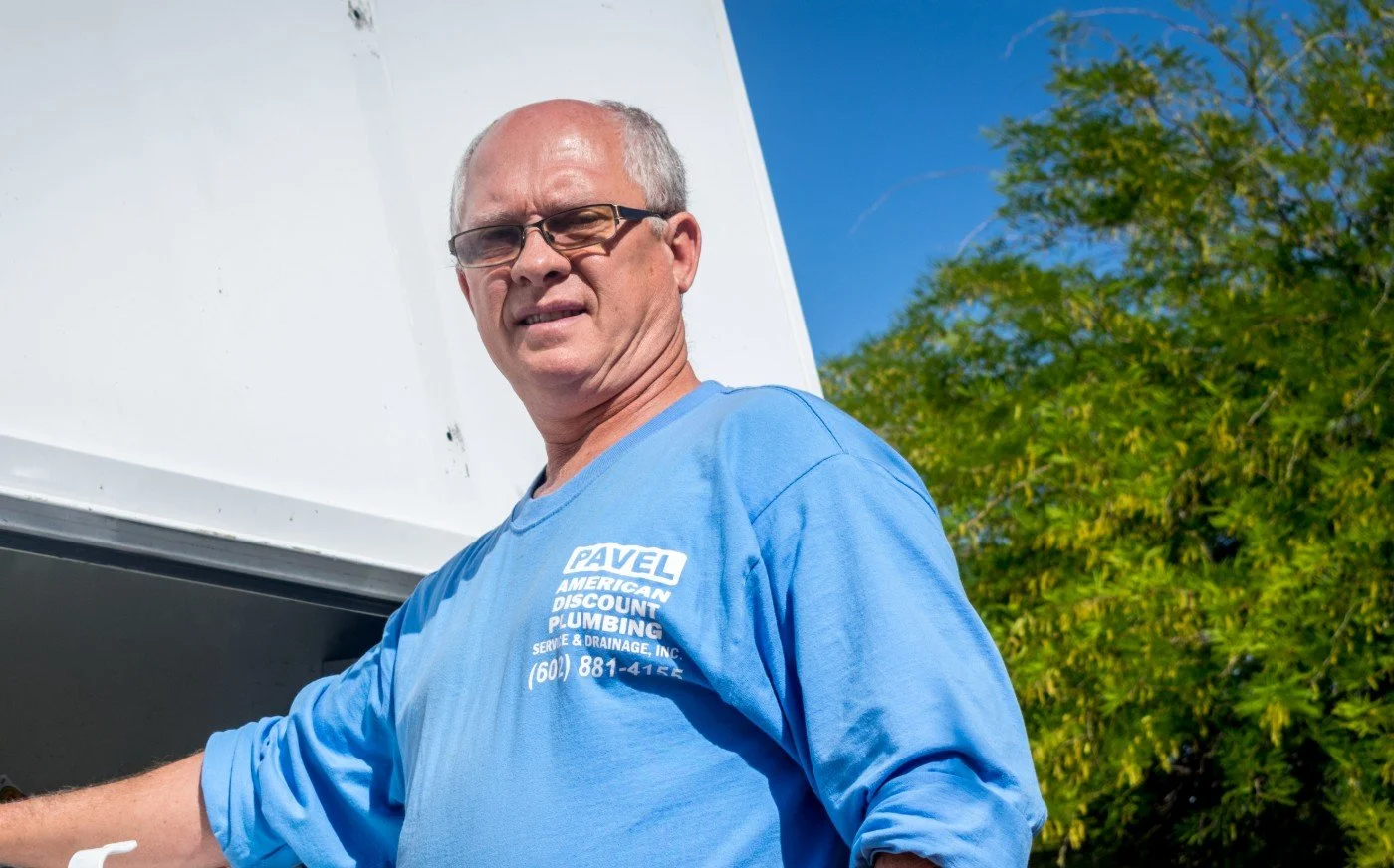
Still have a question? Call Pavel (Paul) directly and get a straight answer, no phone tree.
(602) 883-2787
It depends on the type, the size for your home, and whether you are softening, filtering, or both, so we give you a clear written quote after a water assessment. We size it to your needs so you do not overpay. Call (602) 883-2787 for a free quote.
For most Valley homes, the case is strong. At 14 to 18 grains per gallon, hard water scales up water heaters, wears out fixtures and appliances, and shows up as spotting and filmy skin. Treating it protects your plumbing and is closer to basic home protection here than a luxury.
We generally recommend salt-free for Valley homes, both for convenience and because of regional concerns about salt in wastewater. Salt-based systems are effective but need ongoing salt and produce brine. We will explain the trade-offs for your situation.
A softener treats all the water in your home to stop scale, while reverse osmosis polishes drinking water at one tap for the best taste. They do different jobs, and many homes use both. See our reverse osmosis page for the drinking-water side.
It consistently tests in the 14 to 18 grains per gallon range, which is very hard. The exact number varies by area and source blend, which is one reason we assess your specific water before recommending a system.
Yes, significantly. Hard-water scale is the number one reason Valley water heaters fail early, so softening is one of the highest-return ways to protect both a tank and especially a tankless unit.
Filter and softener cartridges are typically replaced about once a year, and salt-based systems need salt added on a schedule. Salt-free conditioners avoid the salt. We set up a realistic schedule and handle the annual service.
All major brands, including RainSoft, Culligan, Halo, Kinetico, and Fleck. We match the system to your water and home rather than pushing one label.
Yes. Well water can bring hardness, iron, and other issues city water does not, and it needs a different assessment. We know what to test for and how to treat it.
Yes. Carbon filtration addresses chlorine, chloramine, and the compounds that affect taste and odor. Whether you need it depends on your water and what bothers you, which we will assess.
What Our Phoenix Customers Say
Our reputation is built on honest work and fair prices, and our customers say it better than we can. Here are a few of our five-star Google reviews, with more shown live below.
“Highly recommend Pavel! Very reliable and honest. He showed up on time, explained everything clearly, and did excellent work. It’s hard to find a plumber you can truly trust, and he’s definitely one I’d recommend to friends and family.”
“Paul is the best plumber I have ever used and unfortunately I’ve used a few. He is professional, does amazing work and his prices are very fair.”
Tired of Hard Water? Call American Discount Plumbing
Get an honest water assessment and the right treatment system for your Phoenix home from a licensed, family-owned plumber who recommends only what your water actually needs. Call now or send the form.
A real person answers. Same-day and emergency service available.
Request a Free Quote
No obligation. We will call you back fast.