

Water Heater Repair or Replace: What Really Decides It
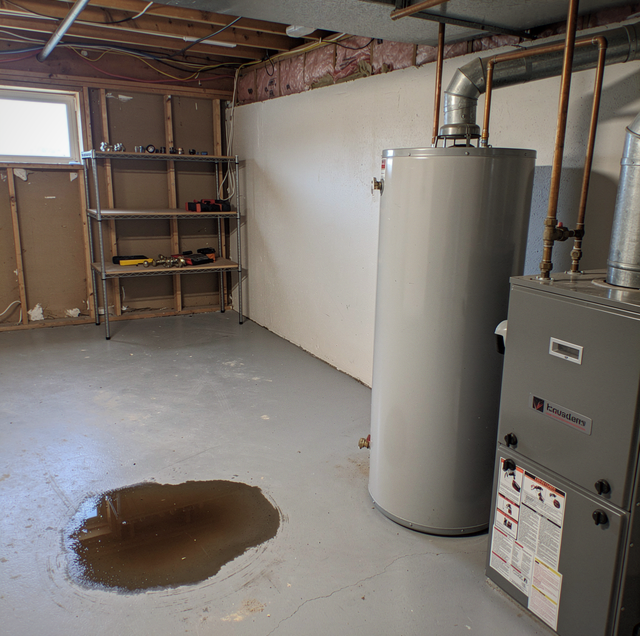
When is a water heater worth fixing, and when is it time to replace it outright? The honest starting point isn't the tank's age by itself, nor is it a single symptom. It's a combination of factors: how old the unit is, how much of its internal hardware has already failed, and whether the failure is in a replaceable part or in the tank shell itself. A five-year-old heater with a bad thermocouple is almost always worth repairing. A twelve-year-old heater with a leaking tank and a rusty drain valve almost never is. Most decisions fall somewhere between those two extremes, which is why understanding the mechanism behind each symptom matters more than guessing from the outside.
Tank Age Sets The Starting Point, Not The Final Answer
Most standard tank-style water heaters are built for a service life of roughly 8 to 12 years, with gas units on the shorter end of that range and electric units sometimes running longer under light use. Manufacturers stamp a serial number on the data plate near the top of the tank that encodes the manufacture date, so a plumber can confirm the actual age instead of relying on a homeowner's memory of the installation date.
Age matters because the tank itself is a welded steel vessel lined with glass or ceramic coating. That coating is never perfect. Microscopic gaps in the lining expose bare steel to hot water, and once corrosion starts at the steel, it doesn't stop until the tank fails. Early in a tank's life, the anode rod absorbs that corrosion instead of the steel. Late in a tank's life, the anode rod is usually spent, and the corrosion clock on the tank itself has already started running. That's why a heater within its first half-life is a strong repair candidate, and a heater past year 10 needs every failure evaluated with replacement on the table.
The Anode Rod Is The Tank's Sacrificial Defense
An anode rod is a metal rod, typically magnesium or aluminum with a steel core, suspended inside the tank. It works through a process called cathodic protection: because the anode rod is more chemically reactive than the tank's steel shell, corrosive minerals in the water attack the rod first and leave the tank alone, at least until the rod is consumed.
In hard-water conditions, that consumption happens faster. Mineral-heavy water accelerates the electrochemical reaction, so an anode rod that might last several years in soft water can wear down noticeably sooner in high-hardness water. A plumber can pull the rod through the port at the top of the tank and inspect it: a rod that's still a solid cylinder with a thin coating is fine, while a rod that's reduced to a bare wire core or covered in calcium buildup has stopped protecting the tank. Replacing a spent anode rod is a simple, low-effort repair on a tank that's otherwise sound, and it's one of the easiest ways to add years to a heater's working life.
Sediment Buildup Changes How The Tank Heats And Sounds
Water carries dissolved minerals, and heating water drives those minerals out of solution. Over time, they settle at the bottom of the tank as a layer of sediment. In hard-water areas, that layer can build noticeably faster than in soft-water areas, because there's simply more mineral content coming in with every fill cycle.
Sediment causes two distinct problems. First, it insulates the bottom of the tank from the burner or lower heating element, so the unit has to run longer to reach set temperature, which shows up as higher energy use and slower recovery after a big draw. Second, water trapped beneath a thick sediment layer boils and pops as steam bubbles rise through the debris, producing the rumbling, popping, or knocking sound that many aging heaters develop. It's a lot like the sound of popcorn kernels shifting in the bottom of a heavy pot: sharp, irregular taps rather than a smooth hum.
Routine sediment flushing through the tank's drain valve, done on a regular schedule, keeps that layer thin and keeps the tank running efficiently. A tank that's gone years without a flush and has a thick, hardened sediment bed is harder to fully clear, and aggressive flushing on a very old tank can sometimes dislodge corrosion that was otherwise sealing a weak spot, which is one reason a plumber will factor tank age into how hard they push a flush on an older unit.
A Thermocouple Or Heating Element Failure Doesn't Mean The Tank Is Dying
Some of the most common water heater complaints trace back to a single component, not the tank itself. On a gas unit, a thermocouple (or a thermopile on newer models) is a safety sensor that confirms the pilot flame is lit before allowing the gas control valve to release gas to the main burner. A worn or misaligned thermocouple causes the pilot to keep going out or the burner to refuse to fire, even though the tank, burner assembly, and gas control valve are otherwise healthy. Replacing that sensor restores normal operation.
On an electric unit, most residential heaters use two heating elements: an upper element and a lower element, each controlled by its own thermostat. If the lower element fails, the upper element can still heat a partial tank of water, producing lukewarm rather than hot water and a shorter supply before it runs out. A failed element or its thermostat is a contained, inexpensive-to-diagnose repair that has nothing to do with the tank's structural condition.
Because both gas and electric heaters involve fuel connections and line voltage at the unit, any work on the gas control valve, burner assembly, wiring, or elements should go to a licensed plumber rather than a DIY attempt. Misdiagnosing a gas or electrical fault, or reassembling it incorrectly, creates a real safety hazard that isn't worth the risk on equipment that heats water to well over 120 degrees.
Rust-Colored Water And Damp Spots Point To The Tank Shell Itself
This is the dividing line between "repair" and "replace." Rust-colored water coming from the hot side only, especially right after the tap has been off for a while, usually means the tank's internal glass lining has failed and the steel underneath is actively corroding. That's a structural problem, not a component problem, and no part swap fixes it.
Moisture is the other tell. A damp ring or puddle forming at the base of the tank, especially one that reappears after being wiped dry, generally indicates that the tank shell has developed a pinhole leak due to internal corrosion. That's different from a leak at a fitting, the drain valve, or the T&P valve connection, all of which are repairable without replacing the whole unit. A plumber can dry the suspected areas and retest to confirm whether moisture is coming from a loose fitting (repair) or weeping through the tank wall itself (replace) before recommending either path.
Tank Vs. Tankless Changes: Which Failure Points Matter
A tankless water heater doesn't store hot water in a tank at all; it heats water on demand as it passes through a compact heat exchanger. That design removes tank corrosion and sediment settling as failure modes, but it introduces its own maintenance point: scale forming on the heat exchanger's internal passages, which restricts flow and reduces output temperature over time in hard-water conditions. Tankless units also rely on flow sensors and an igniter/control board rather than a thermocouple and dip tube, so their common failures look different, even though the underlying repair-or-replace logic (isolated component versus core hardware) still applies. A tankless heat exchanger reaching end of life from years of untreated scale is a legitimate replacement trigger, just like a corroded tank shell is on a standard unit.
Extreme summer heat adds a wrinkle for both types. When incoming groundwater runs warmer, the heater doesn't have to raise the temperature as far, which can mask a weakening unit's recovery problems for part of the year. Colder months, when incoming water temperature drops and hot-water demand rises, tend to expose that same weakening unit most quickly, since it has to work harder to reach the same set point. Either season can be when a marginal heater's true condition finally shows up.
Repair-Favoring Signs Vs Replace-Favoring Signs
| Signs Repair Usually Makes Sense | Signs Replacement Usually Makes Sense |
|---|---|
| Tank is under roughly 6 years old | Tank is at or beyond its typical 8-12 year service life |
| One isolated failed part: thermocouple, heating element, T&P valve | Rust-colored hot water traced to the tank itself |
| Pilot won't stay lit, but the tank and burner area are dry | Damp or wet spots at the base that reappear after drying |
| Rumbling or popping from sediment, tank otherwise sound | Popping/rumbling plus a noticeable drop in hot water volume even after flushing |
| Leak at a fitting, drain valve, or valve connection | Multiple unrelated component failures within a short span |
| Anode rod depleted but tank shell shows no corrosion | Recurring pilot outages tied to a failing gas control valve |
What A Licensed Plumber Checks Before Recommending Either Path
A full diagnostic visit typically covers the data plate for confirmed age, a visual check of the tank shell and fittings for corrosion or moisture, a look at the anode rod's condition, a check of sediment depth at the drain valve, and a function test of the T&P valve, thermocouple or elements, and thermostat. The T&P valve exists purely as a safety device: it releases pressure automatically if the tank overheats or over-pressurizes, so its operation should only be checked and serviced by a plumber, never disabled or plugged by a homeowner. Weighing all those findings together, rather than reacting to a single symptom, turns "it's making a weird noise" into a clear repair-or-replace recommendation.
Frequently Asked Questions
In hard-water conditions, a magnesium anode rod often needs replacing within 2 to 4 years, while aluminum/zinc rods typically last closer to 4 to 6 years since they corrode more slowly in mineral-heavy water; a plumber checks the rod's actual wear rather than going strictly by the calendar.
Yes. A waterlogged expansion tank that has lost its air charge can produce banging noises and pressure swings that mimic heater trouble, even though the water heater itself is fine. A plumber typically checks the expansion tank's air charge before condemning the heater.
Tankless units don't collect sediment in a tank, but manufacturers generally recommend an annual descaling service in which a pump circulates a citric acid or vinegar solution through dedicated service valves to dissolve scale forming inside the heat exchanger.
Not necessarily. Recurring drips can indicate thermal expansion in a closed plumbing system, often caused by a backflow preventer or pressure regulator elsewhere in the house that raises pressure during every heating cycle; a plumber may recommend installing or servicing an expansion tank rather than just swapping the valve.
Electric tanks have no open flame or flue drawing in outside combustion air, which means less condensation-driven corrosion around the base over time; that's one reason a 10-year-old electric tank sometimes still qualifies as a repair candidate, whereas a gas tank of the same age more often doesn't. When a gas unit's pilot outages do trace back to hardware rather than the thermocouple, the gas control valve is typically swapped as a complete sealed assembly rather than repaired piece by piece.
Often, yes, and one commonly missed source is condensation, not a leak at all: a cold tank surrounded by warm, humid air (common right after a large hot-water draw refills the tank with cold water) can sweat enough to pool underneath and look exactly like a slow leak. A plumber checks for this by wiping the tank dry and watching whether moisture reappears within minutes (condensation) or the tank stays dry (an actual leak elsewhere).
There's no universal cutoff that tells a homeowner exactly when to stop repairing and start replacing. What holds up across nearly every service call is the same pattern: contained component failures on a younger tank are worth fixing, while corrosion in the tank shell itself, on a unit already well into its expected service life, is a sign the tank is telling you it's done. Getting an accurate read on which situation applies is worth a thorough inspection rather than a guess based on a single symptom.
Schedule a water heater inspection — get a clear repair-or-replace recommendation from a licensed plumber before the unit fails without warning. American Discount Plumbing serves Phoenix and the Valley. ROC #150707. Call (602) 883-2787.
