

A Nail Through a Water Line: Why It Might Not Leak Yet
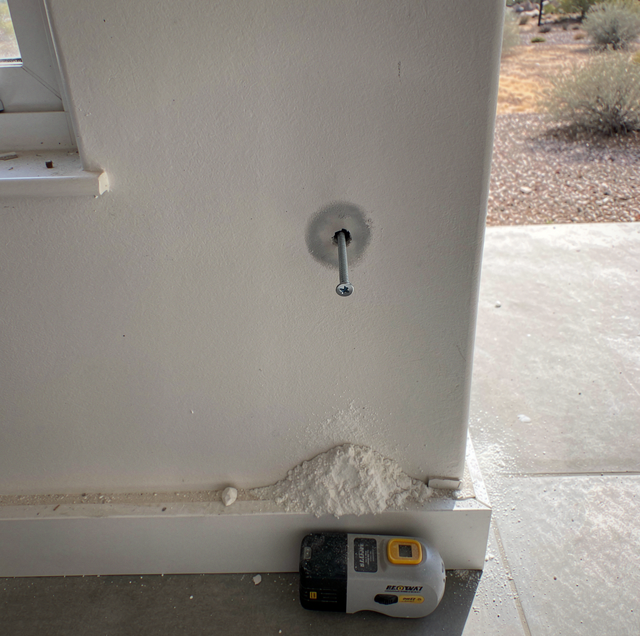
You're driving a screw into the wall to hang a floating shelf. On the last turn, the resistance changes: a soft catch, then a faint squeak that drywall alone doesn't make. You stop. No water shows on the paint, no dark ring spreads, nothing sprays. It's tempting to assume you got lucky and missed whatever's back there. What that fastener actually caught may not announce itself for a while, and that gap between the moment it happens and the moment you find out is the part almost nobody expects.
The same scene plays out for a handyperson setting a curtain rod, a remodeler running a new run of trim, or anyone mounting a TV bracket at exactly stud height. A stud finder tells you where the framing is, not where a supply line runs behind it, and plumbing doesn't always follow the fastener pattern you assume. A line can cross a stud bay at an odd height to reach a fixture on the other side of the wall, or run closer to the surface than the drywall thickness suggests. Careful work and a missed line aren't contradictory.
Why a Plugged Puncture Doesn't Leak Right Away
A fastener that goes through a supply line doesn't leave a clean, open hole. In a lot of cases, the nail or screw is still sitting in the puncture it just made, filling most of the gap the way a cork fills a bottle neck: imperfectly, but well enough that little or no water gets past it at normal household pressure. That's the mechanical reason a strike like this can sit invisible inside a wall for days or weeks instead of announcing itself on the spot.
It doesn't stay that way forever. Water pressure in a house isn't constant; it shifts with temperature, with how many fixtures are running elsewhere, and with the small vibrations of daily use in the wall itself. Over time, those changes can work a snug puncture looser, letting a weep that started as nothing become a slow drip, and eventually something worse. What began as a fastener sitting quietly in a wall can turn into an active leak with no new impact at all.
What the Timing of the Leak Actually Tells You
How soon water shows up, and how it shows up, is useful diagnostic information, not just a curiosity. Three patterns cover most of what happens after a fastener finds a line:
- Water at the moment of impact: The strike tore the material enough that the fastener isn't sealing it, and pressure is pushing water out immediately. This is the version most likely to spray or pool right away.
- A leak that shows up hours or days later: The fastener plugged the hole well enough at first, and normal pressure changes or minor movement in the wall gradually opened a path around it. The delay doesn't mean the damage is minor, only that it took longer to surface.
- No sign of trouble until the fastener is disturbed: The puncture stayed sealed as long as nothing touched it, and a later renovation, a dropped picture, or simple age and vibration finally moved it enough to let water through.
Because the fastener marks the exact point of entry, this situation is different from a leak with no obvious starting point, like one hidden inside a slab. A slab leak usually has to be located first, which is why a separate detection specialist with the right equipment often gets brought in before any repair work starts. Here, the wall itself is already telling you where to look. In most cases, a plumber can go straight to the fastener on that section of wall, open a small access area, and assess the line directly, without a separate detection step.
What a Fastener Does Once It Punctures the Line
What the strike actually did to the line depends on the material behind the wall, and the two common types of residential supply line don't fail the same way. A rigid metal line tends to dent or pierce cleanly around the point of impact, and a snug-fitting fastener can sit in that opening for a surprisingly long time before it lets much through. A flexible plastic line is more likely to split or crack along the strike rather than just puncture, and it can behave differently once pressure starts acting on it. None of that tells you which one is behind your own wall, and guessing isn't useful here; what matters is that either way, a fastener sitting in a supply line is not a stable long-term condition, whatever material it's in.
A puncture into a wall with older wiring or a fed circuit nearby can also nick a wire, not just a pipe. If you smell burning, see sparking, or a breaker trips, stop and call an electrician before touching anything electrical nearby.
There's also a wall-repair side to this that's worth naming plainly: a plumber's job is the water line itself, isolating the damaged section, and reconnecting it correctly. Patching and repainting the drywall around the access opening afterward is separate trade work, not something bundled into the plumbing visit.
The Visit Itself, and What Decides the Repair
If water is actively spraying or pooling, that's not a wait-and-see situation. Active leaks get same-day priority scheduling rather than the next available slot, because standing water inside a wall cavity gets worse the longer it sits.
For a leak that's already shown itself, the visit usually starts with a small access opening at the fastener rather than a wide exploratory cut, since the entry point is already known. From there, the plumber looks at how the line was actually struck: a shallow nick, a clean puncture, or a longer split, along with the material and how the surrounding section is holding up. That assessment determines whether the damaged length is cut out and replaced with a short new section, or whether a localized repair fitting is sufficient, followed by pressure testing the reconnection before anything is closed back up.
If nothing has leaked yet and you're just uneasy about a fastener you know went in at the wrong depth, that unease is worth acting on rather than waiting to see what happens. A line sitting on a fastener with no visible symptoms yet is still a line sitting on a fastener, and getting it looked at before it fails on its own schedule is generally the better position to be in.
Frequently Asked Questions
It can, and the interesting part is which of the two metals loses. Where a steel fastener contacts copper in the presence of moisture, the steel is the anode: it corrodes preferentially, and the copper is the metal being protected, not the other way around. So the part quietly degrading is the plug itself. The fastener rusts and loses section inside the very puncture it had been filling, and because the reaction needs moisture to proceed at all, a puncture damp enough to weep is a puncture actively eating its own stopper. That is a large part of why a strike can stay silent for years and then open with nothing new having happened to it.
No. Beyond simple pressure changes, ordinary wall movement from temperature and humidity swings can work a snug puncture looser over months, which is one of the more common ways a fastener that seemed to seal itself eventually turns into a real drip with no new impact to explain it.
Often, yes. Where a metal line tends to hold a fastener snugly enough to slow a leak, a plastic line that's cracked rather than cleanly punctured can seep in a thin trickle that tracks along the fastener's shank instead of pooling, which makes it easier to miss during a casual look at the wall.
That's actually a common way these show up. A fastener that sealed itself decades ago can be reactivated by something unrelated, like drilling nearby for a new project, a wall getting bumped during a remodel, or drywall anchors around it loosening with age, all of which can be enough to finally let water through a puncture that had been quietly stable.
It can. A single isolated screw is usually easy to correlate to the leak. A row of closely spaced fasteners, such as along a chair rail or picture rail, makes pinpointing the exact one harder, and that's one of the situations where a plumber may still bring in a detection specialist, even though the general area behind the wall is already known.
Because knowing the entry point is not the same as knowing where the puncture is. A screw driven at an angle can graze the side of a line and keep going past it, leaving the actual hole on the far side of the pipe from the head you can see, several degrees around from where anyone would think to look. The pipe also cannot be called sound on the strength of the face that happens to be visible. The opening must expose the full circumference at that spot so the entire section can be inspected before it is either repaired or left in service.
Schedule an assessment — active leaks get same-day priority, and a plumber can open the wall at the fastener, evaluate the line, and reconnect it correctly. American Discount Plumbing serves Phoenix and the Valley. ROC #150707. Call (602) 883-2787.
