

Sewage Backup in the House? Do This First
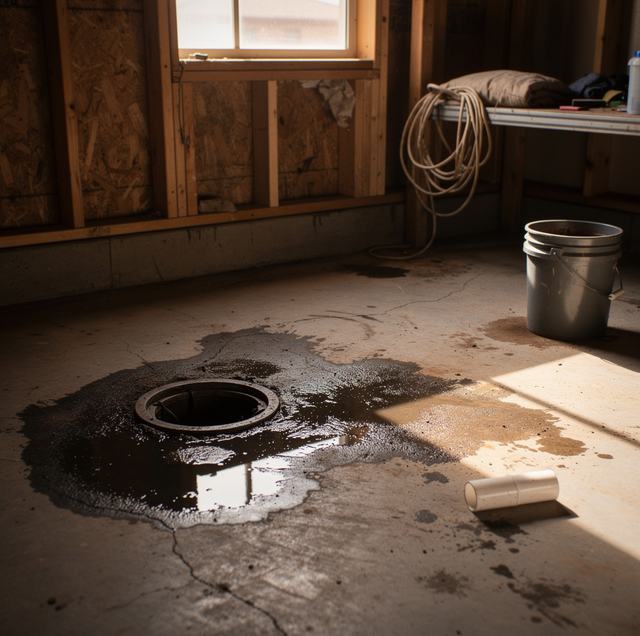
Dark water rising out of a floor drain, a toilet that won't stop overflowing, or a foul smell spreading from a bathroom you haven't used in an hour: a sewage backup announces itself fast, and it asks something different of you than an ordinary leak does. This is not just water damage. It's contaminated wastewater carrying bacteria and waste from every drain in the house, and the first few minutes matter for keeping everyone safe while the real problem gets sorted out.
Stop Using Water And Fixtures Right Away
The moment you notice sewage coming up rather than going down, stop sending any more water into the system. Every flush, every load of laundry, every dishwasher cycle adds volume to a line that's already backed up, and that extra water has nowhere to go but back out through the lowest point it can find, usually a floor drain, a basement fixture, or the drain nearest the blockage.
Tell everyone in the house to hold off on toilets, sinks, showers, and appliances until the cause is found. This single step often keeps a bad situation from turning into a worse one, since a backup that's contained to one floor drain can spread to multiple fixtures if water keeps flowing into a line that's already full.
Avoid Contact With The Water And Ventilate The Area
Wastewater from a sewer backup carries bacteria, viruses, and other contaminants that a clean-water leak never does, so treat it as something to avoid rather than something to wade through or mop up casually. Skip walking through it barefoot or in ordinary shoes, and keep it off your hands. If you do need to be near it for any reason, gloves and boots that can be washed or discarded afterward are worth having on hand.
Open windows and run exhaust fans to move air out of the affected space, and turn on a bathroom fan or a portable fan if one is available. Ventilation reduces the concentration of odors and airborne particles while the area remains contaminated, making the space more tolerable and safer until cleanup and repair are handled by someone equipped to do so.
Keep People And Pets Away From The Affected Area
Close the room door if you can, and keep children and pets out of the space entirely until it's been cleaned and disinfected. Kids and animals are more likely to touch a wet floor, track contaminated water to another part of the house, or put a hand or paw near their mouth without thinking about what they just walked through.
If the backup reaches carpet, upholstered furniture, or anything porous, treat those items as contaminated rather than something to save with a quick wipe-down. Porous materials hold bacteria deep within the fibers, where surface cleaning can't reach, and a professional water-damage or cleanup service is generally the safer route once a plumber has confirmed the source is under control.
Why A Sewage Backup Is Different From A Clean-Water Leak
A burst pipe or a leaking fixture is a mess to clean up, but the water itself is safe to touch. A sewage backup changes that equation completely. The water carries waste from every toilet, sink, and drain connected to the line that failed, along with whatever bacteria and organic material normally travels through a sewer system on its way out of the house.
That difference changes how you should approach almost every part of the response. Cleanup that would be a simple towel-and-fan job with clean water instead calls for disinfection, and materials that soaked up clean water and dried out fine often need to be discarded when they've soaked up sewage instead. It also changes the urgency: a clean-water leak can sometimes wait a day for a scheduled repair, but a sewage backup affecting a bathroom or kitchen you rely on daily usually can't, both because of the contamination and because the underlying blockage tends to get worse, not better, if it's left alone.
What Causes A Sewage Backup
Most backups trace to one of three sources, and figuring out which one you're dealing with shapes what a plumber does to fix it.
A clog or root intrusion in the main line: The main sewer line carries wastewater from the entire house to the municipal connection, and when something blocks that line, everything upstream backs up with nowhere else to go. Grease, wipes, and other debris that build up over years are common culprits, and so are tree roots that work their way into a line through a small crack or joint, seeking out the moisture inside. Once roots take hold, they thicken over time and narrow the pipe further with each passing season.
Heavy rain overwhelming the municipal system: During a significant storm, the public sewer system can take on more stormwater than it's designed to handle, and in some setups, that overflow pushes back into private lines connected to it. A backup that shows up during or right after heavy rain, especially if neighbors report the same thing, often points to a system-wide overload rather than a problem isolated to one house.
A collapsed or damaged sewer line: Pipes shift, crack, or collapse over the years from ground movement, age, or old materials that simply wear out. A section of pipe that's crushed or sunk can't carry flow properly no matter how clear the rest of the line is, and this kind of damage tends to produce repeated backups rather than a single isolated event.
What A Plumber Does To Diagnose And Clear It
Once the immediate safety steps are handled, the real work is figuring out exactly where the blockage or damage sits and clearing it without guessing. A plumber typically starts with a camera inspection, feeding a waterproof camera down the line to see the interior directly: a root mass, a section packed with debris, a crushed pipe, or a low spot where waste collects instead of flowing through.
With the cause identified, most clogs and buildup are cleared with hydro-jetting, which uses a high-pressure stream of water to break apart blockages and scour the inside of the pipe clean, or with a mechanical auger for more localized clogs. Hydro-jetting, in particular, does more than just punch a hole through a blockage; it also clears the pipe walls, which slows how quickly the same buildup returns.
In more serious cases, when the camera reveals a section that's collapsed, badly cracked, or so root-damaged that clearing it wouldn't hold for long, the fix moves from cleaning to repair. Depending on what the inspection shows, this can mean replacing a section of pipe through an access point or, in some cases, using a trenchless method to repair the line with minimal digging. The camera inspection makes that decision reliable rather than a guess, since it shows exactly where the damage is and how much of the line is affected.
Preventing The Next Backup
A backup that's cleared once can recur if the underlying condition isn't addressed, so a few steps are worth considering once the immediate emergency is resolved. A backwater valve installed on the main line acts as a one-way gate, allowing wastewater to flow out toward the municipal system while preventing it from flowing back in during a municipal overload or a downstream blockage. For a home with a history of backups tied to heavy rain, this is one of the more direct fixes available.
For an older home, a routine camera inspection of the main line every few years can catch root intrusion, sagging sections, and buildup long before they cause a backup. Roots and buildup develop gradually, and a camera inspection during a calm period, rather than during an active emergency, gives a plumber the chance to address a developing problem on a planned schedule rather than an urgent one. Being mindful of what goes down drains and toilets, keeping grease, wipes, and other debris out of the system, also reduces how often a line needs intervention.
Frequently Asked Questions
Hold off on any fixture until the source is identified, even one that seems unrelated to where the backup is happening. If the main line is blocked, water sent down any drain in the house adds to a system that's already full and can push the backup to a new location. Wait until a plumber confirms which lines are affected before resuming normal water use.
Treat the area as contaminated rather than a standard cleanup. Wear gloves and boots, avoid direct contact with water, and discard porous materials such as carpet padding, cardboard, and soaked upholstery that can't be fully disinfected. For anything beyond a small, contained spill, a professional water-damage or biohazard cleanup service is generally the safer choice, since they have the equipment and disinfectants to handle contaminated water properly.
A recurring backup in the same drain or floor area usually indicates a blockage or damage upstream in the line serving that fixture, rather than a problem with the fixture itself. Root intrusion, a sagging section of pipe, or a partial clog that never fully clears can each cause the same location to back up repeatedly until the underlying cause is found and addressed directly.
Standing wastewater that isn't addressed can soak into flooring, subfloor, and drywall, and prolonged exposure weakens those materials over time, the same way any water damage would, with the added complication of contamination. It's less common for a backup alone to affect the structural foundation itself, but the longer contaminated water sits, the more materials will need replacement rather than drying and disinfection.
A backup limited to your house, especially one confined to a low fixture like a basement floor drain, often points to a clog or damage in your own line. A backup that shows up in multiple homes on the same street during or after heavy rain, or one where a camera inspection finds your own line clear, points more toward a municipal system that's temporarily overwhelmed. A backwater valve helps protect against the second scenario even when it can't prevent the overload itself.
If the backup is affecting a floor drain near a water heater, furnace, or other equipment, and there's a real chance rising water could reach it, shutting off power to that equipment is a reasonable precaution, following the same logic as any flood situation involving electrical equipment near standing water. For a backup contained to a bathroom or kitchen fixture away from equipment like that, this step usually isn't necessary, but use judgment based on how far the water has spread.
Request emergency drain cleaning — get the blockage found and cleared safely before contamination spreads further. American Discount Plumbing serves Phoenix and the Valley. ROC #150707. Call (602) 883-2787.
