

How a Backflow Preventer Really Protects Your Drinking Water
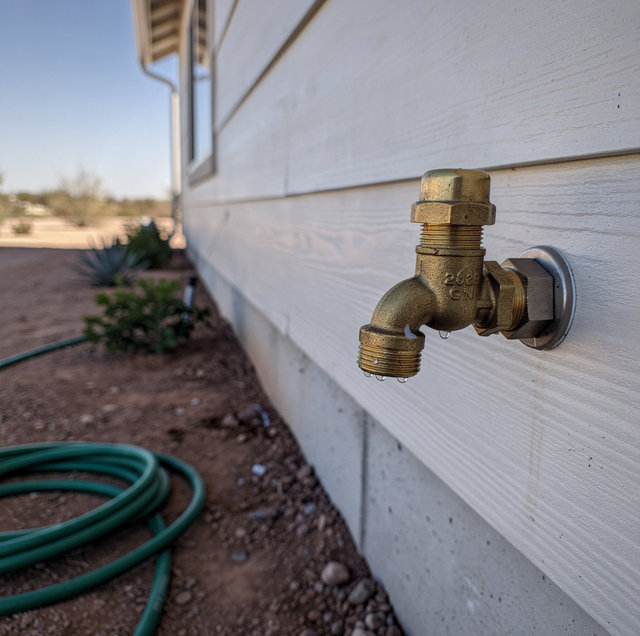
A cross-connection is any point where the pipes carrying your drinking water link up, even temporarily, with something that is not drinking water: a garden hose sitting in a bucket, an irrigation line, a mop sink, a chemical feed tank. Under normal conditions, the pressure inside the supply pipe pushes outward, so nothing on the far side of that connection has a way back in. The exposure opens at the moment when the pressure relationship flips. A water main break down the street, a hydrant flush, or a heavy pull from a fire pump can drop the pressure in the supply pipe below the pressure on the other side of the connection, pulling water backward by vacuum. That is back-siphonage. An irrigation pump or a building's own pump pushing harder than the incoming supply creates the opposite problem, called back-pressure. Either way, whatever is sitting on the far side of that cross-connection now has a path toward the pipes that feed your faucets. A backflow preventer's entire job is closing that path. That is different from a sewage backup, which contaminates through the drain lines rather than the supply lines; backflow is specifically a supply-side reversal.
Myth: Water Only Flows One Way
A supply line does move water in one direction under ordinary operation, and that is exactly why a reversal is easy to dismiss. A plain pipe with no dedicated protection has nothing built into it that actually blocks the other direction. Ordinary flow, gravity, and normal friction in the line discourage reverse movement most of the time, but none of these is a mechanical barrier, and nothing about the pipe itself prevents movement in the other direction during the kind of pressure event described above. That is the gap a dedicated backflow assembly closes: not a stronger pipe, but a component whose entire function is refusing the reverse direction even when the pressure math would otherwise let it through.
Myth: Backflow Is a Utility Problem, Not a Household One
A water utility manages the pressure and treatment of the water in its mains, but it has no way to see or control what happens past your meter. Every cross-connection that matters on a residential or commercial property sits on the customer's side of that meter: the hose bibb, the irrigation valve, the mop sink faucet, a boiler's chemical feed. If a pressure event pulls something backward through one of those, it enters the private plumbing first, and if that connection has no protection of its own, nothing stops it there. That is why the fix lives at the specific fixtures and lines that create a cross-connection, not just at the property's main shutoff. A utility can flush a hydrant and drop pressure across a wide area; whether that drop actually pulls anything into a given building depends entirely on what device, if any, sits at that building's own cross-connections.
Myth: A Garden Hose Is Harmless
A hose left running into a bucket of soapy water, a pool, a chemical sprayer tank, or even a low spot that puddles is a textbook cross-connection, and one of the most common ones on a residential property. The fix at that specific fixture is usually simple: a hose bibb vacuum breaker threaded onto the spigot itself, a small one-way fitting that blocks reverse flow right where the hose connects. An irrigation system carries the same exposure at a larger scale, with fertilizer, pesticide, or standing water sitting in buried lines under pressure. That is why a dedicated pressure vacuum breaker, mounted above the highest sprinkler head in that zone, is standard equipment on irrigation systems, whether they're running during active watering months or sitting mostly idle the rest of the year.
The height a pressure vacuum breaker needs above the highest sprinkler head is specified by the manufacturer, not a rule of thumb. A raised planter bed or a head added later on a slope can quietly put it below that mark.
Myth: A Check Valve and a Backflow Preventer Are the Same Thing
A check valve is a single spring-loaded disc that swings or lifts open for forward flow and is supposed to seat shut against reverse flow. It works until something (grit, scale, a worn seat) keeps that one disc from closing fully, and then it fails quietly with no way to tell from outside. A backflow preventer assembly is built around that exact weakness. A double-check valve assembly places two independent check valves in series, so a single failure still leaves one functioning barrier; it is common on fire lines and lower-hazard commercial connections. A reduced pressure zone assembly goes further, adding a relief valve in the zone between its two checks that opens to atmosphere the instant the pressure relationship between them goes wrong, physically discharging water rather than letting it pass backward. That is the standard response for higher-hazard connections, such as an irrigation system with a fertilizer injector or many commercial systems. Both assemblies also include test cocks, small valved ports built into the body for testing.
Myth: Clear Water Means Nothing Happened
Color and smell are not reliable signals here. Many of the substances that create a hazardous cross-connection, such as fertilizer concentrate, a chlorinated pool, or certain cleaning chemicals, mix into water without turning it visibly cloudy or giving it an odor anyone would notice at the tap. A backflow event large enough to matter can happen during a pressure drop that lasts only minutes, long before anyone at a sink would have reason to suspect it.
If you suspect a backflow event happened, such as after a nearby water main break or hydrant work, stop using the water and call your water provider and a licensed plumber rather than judging safety by taste, color, or smell.
Treating clarity as proof of safety skips the step that actually matters: whether the connection had effective protection at the moment the pressure reversed.
Myth: Install It Once and Forget It
Every part inside these assemblies is mechanical: springs, rubber seats, moving discs, and, in a reduced pressure zone assembly, a relief valve that must move freely under all conditions. Those parts wear the same way any moving plumbing part does, and a device that tested fine when installed can fail its next check years later. Many water utilities require certain assembly types, particularly reduced-pressure zone assemblies on irrigation systems and commercial connections, to be tested annually by a certified backflow tester, though exactly which connections this applies to varies by utility and by connection type. Skipping that test doesn't make the device stop working immediately; it means nobody has confirmed it's still working, which is a different and riskier condition than it sounds.
Which Assembly Protects Which Connection
The assembly that belongs on a given connection depends on how that connection is used and how much of a hazard it represents if it fails.
| Assembly | Typical Location | What It Protects Against |
|---|---|---|
| Atmospheric vacuum breaker | Mop sinks and fill lines, mounted above the fixture's flood rim | Back-siphonage only, on connections not held under continuous pressure |
| Hose bibb vacuum breaker | Outdoor spigots | Back-siphonage through a hose left in a bucket, pool, or sprayer |
| Pressure vacuum breaker | Irrigation systems | Back-siphonage on a line that stays under continuous pressure |
| Double check valve assembly | Fire lines, lower-hazard commercial connections | Back-siphonage and back-pressure, with two independent checks |
| Reduced pressure zone assembly | Irrigation with chemical injection, higher-hazard commercial connections | Back-siphonage and back-pressure, with a relief valve as a second layer |
None of these substitute for one another. The connection they're protecting determines which one applies, and putting a lower-protection device on a higher-hazard connection defeats the point of installing one at all.
Frequently Asked Questions
A certified backflow tester connects a calibrated differential-pressure gauge to the assembly and confirms each internal component is holding and releasing at the pressure it's supposed to. A failed test is usually a worn or debris-fouled valve seat rather than a broken spring, which is why a device that passed one year can fail the next with no outward sign. Testing these assemblies is licensed, certified work, not a homeowner check.
Yes. An atmospheric or pressure vacuum breaker mounted outside holds water in its body between uses, and if that water freezes, the expansion can crack the plastic bonnet or housing. A foam insulation cover, or having a plumber shut off and drain the irrigation line's backflow assembly before freezing weather arrives, prevents that specific failure. A cracked housing typically shows up as a steady drip or spray at the device once temperatures rise again.
Yes. Many municipal water providers install a simple dual-check valve right at the meter, ahead of anything a plumber adds inside the property, specifically to prevent a customer's line from drafting water back into the main during a pressure drop. That device belongs to the utility, not the homeowner, and it's what actually turns the household plumbing into a closed system from that point forward. A plumber sizing anything downstream that depends on the system being open or closed should confirm whether that meter-side check is there rather than assuming based on what's installed indoors.
A hose left running to top off an aquarium, fish pond, or water feature is common, since the end sits submerged the whole time it's filling. An atmospheric vacuum breaker only works when it's mounted above the fixture or opening it protects, because its air-inlet design depends on gravity keeping water away from that inlet. Turn the geometry upside down, and the device can't do its job.
Slightly, by design. Every one of these assemblies adds moving parts and a small pressure drop across the device, typically too minor to notice at a tap under normal household demand. It becomes noticeable on a system with several assemblies in series, or on a line already running near its pressure limit, in which case a plumber can check where the drop is happening rather than assuming any one device is the cause.
A hose bibb that only ever fills a bucket needs just a hose bibb vacuum breaker, but repurpose that same spigot to feed a chemical sprayer tank or a permanent connection to an irrigation zone, and the assembly requirement can jump to a pressure vacuum breaker or higher, because the hazard classification follows what's connected to a fitting, not the fitting itself. Requirements can differ from one utility to the next and even between two connection types on the same property, which is why the same address can have an atmospheric vacuum breaker on a mop sink fill line and a reduced pressure zone assembly on its irrigation system at the same time.
Have a licensed plumber evaluate the backflow protection on your property — you'll know exactly which assembly is there and whether it's due for testing. American Discount Plumbing serves Phoenix and the Valley. ROC #150707. Call (602) 883-2787.
