
Phoenix Summer Heat and Your Water Heater: Days Over 100 Degrees Across the Valley
A water heater in a Phoenix garage spends about a third of the year in air hotter than 100 degrees. This page shows how many days a year reach 100 or higher at 11 official weather stations across the Valley, using NOAA's 30 year climate normals, which are the current official set as of 2026, and what that heat does to the equipment.
111 days
a year reach 100 degrees or higher at Phoenix Sky Harbor, the Valley's reference station
121 days
at Laveen, the most of any station here
81 days
at Carefree, where higher ground takes about a month off the hot season
105°F
average daily high at Sky Harbor across June, July and August
Days a year at or above 100 degrees
Each circle is a NOAA weather station. Click one for its numbers and the neighborhoods closest to it.
Every station, current NOAA normals as of 2026
Source: NOAA National Centers for Environmental Information, U.S. Climate Normals 1991 to 2020, annual and seasonal dataset, data types ANN TMAX AVGNDS GRTH100 (days with a high of 100 or more), JJA TMAX NORMAL and ANN TMAX NORMAL, retrieved September 20, 2026 from the NCEI data service. Figures are by weather station, not by city, because that is how NOAA publishes them. Glendale, Peoria, Goodyear, Buckeye and Cave Creek have no station with published normals, so the closest station is named instead. Differences between nearby stations reflect elevation, irrigation and how built up the surroundings are. Map positions are approximate.
What the heat does to plumbing
Garage and attic water heaters age faster.
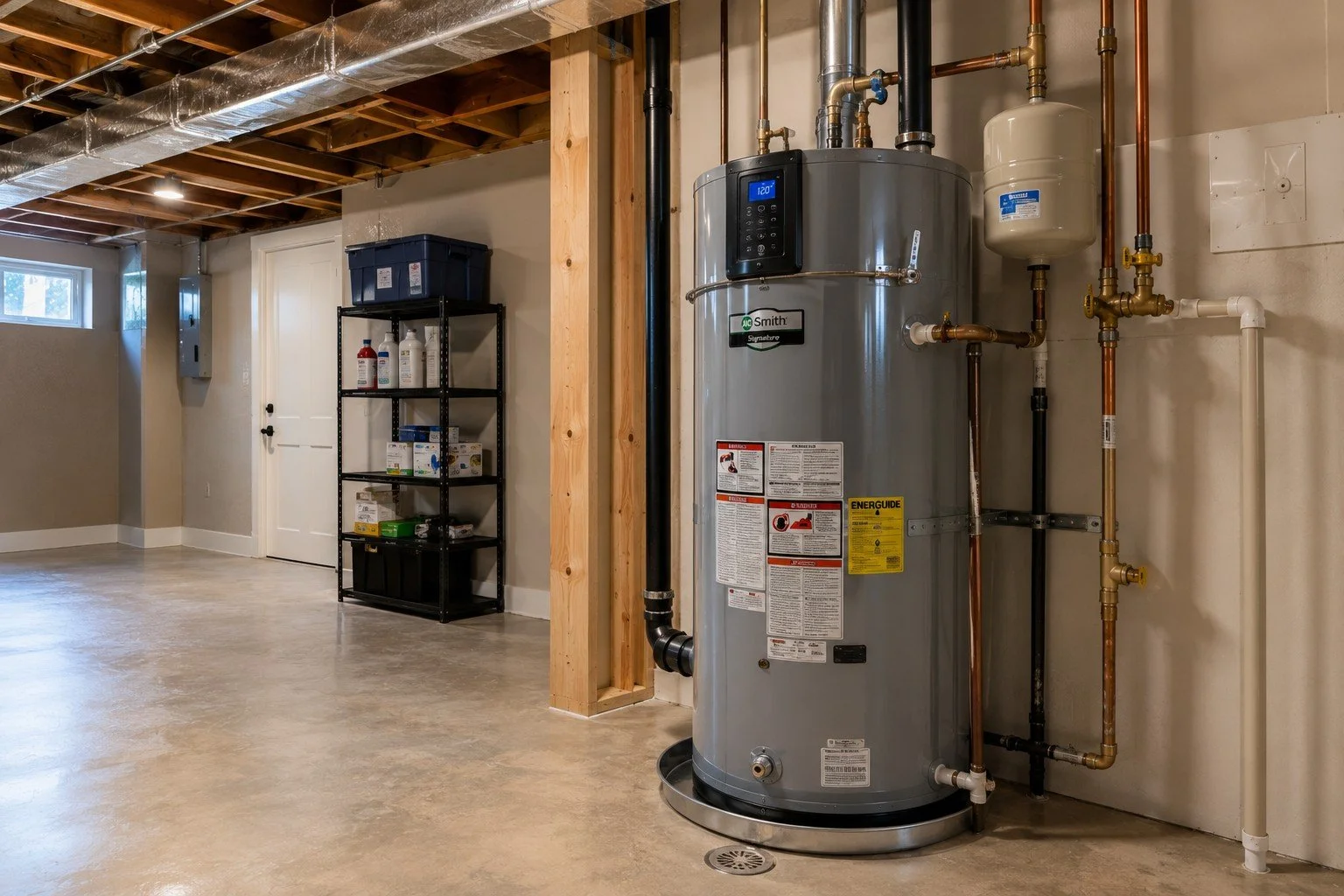
Relief valves, plastic drain valves, flex connectors and electronic controls all sit in air far hotter than they were tested in.
Attic units are the costly ones when they fail.
A pan with a working drain line is what stands between a leaking tank and a collapsed ceiling. Check it before summer.
Thermal expansion is greater.
Water that arrives warm and is heated further has nowhere to go in a closed system. A working expansion tank protects the heater and every fixture valve in the house.
Tankless units behave differently by season.
Warm incoming summer water means more hot water capacity. Size the unit for January.
Exposed pipe degrades.
Sun and heat make uninsulated plastic brittle. Outdoor lines, hose bibs and evaporative cooler supply lines are the usual casualties.
Questions about this data
Most Valley water heaters sit in a garage, an attic or an outdoor closet, none of which is cooled. For three to four months the air around the tank runs well above 100 degrees, which ages the relief valve, the anode, plastic fittings and the control board faster than the same unit would age in a milder climate. Add very hard water and the working life of a tank here is usually shorter than the number printed on the box.
Water mains and the service line to your house are buried shallow in ground that bakes all summer, and pipes that run through an attic can sit in air well above 130 degrees. None of the Valley water providers we checked publish a tap water temperature, so we do not print one. If you want your own number, run the cold tap for two minutes in July and put a kitchen thermometer in a glass.
Yes. A tankless unit is rated by how many gallons per minute it can raise by a given number of degrees. When incoming water is warm, the unit has less work to do and can supply more fixtures at once. When it is cold in January, the same unit supplies fewer. We size for the winter condition so you are not short of hot water in the one season you want it most.
The thermostat setting is about safety at the tap, not the room the heater sits in. 120 degrees is the usual recommendation. What heat does change is maintenance: check the relief valve and the expansion tank yearly, flush sediment yearly, and look at any attic unit's drain pan and drain line before summer, since a leak up there does the most damage.
They are official U.S. Climate Normals from NOAA's National Centers for Environmental Information, which average each station's daily records over the 30 years from 1991 to 2020. Days at or above 100 degrees is NOAA's own published figure for each station, not something we computed. NOAA updates the normals once a decade, so the 1991 to 2020 set is the current official one as of 2026 and will stay so until the 2001 to 2030 set is released. Recent summers have run hotter than the 30 year average.
For information purposes only. This page is a general guide compiled from public sources as of September 2026. It is not professional, legal, financial or engineering advice, and it is not a quote or a guarantee. Climate normals are 30 year averages, not a forecast. Figures, rules and programs change, and your own home, bill or project may differ. Confirm anything important with the source linked on this page or with the agency or utility concerned before you act on it. American Discount Plumbing accepts no liability for decisions made using this page.
Water heater struggling through another summer?
American Discount Plumbing has repaired and replaced water heaters across the Valley since 2000: tank, tankless and heat pump. Owner Pavel Farcas tells you honestly whether a repair will hold or whether it is time to replace. Licensed, bonded and insured, AZ ROC #150707.
Related: water heater repair, water heater replacement, tankless water heaters, water hardness by city, water heater rebates.