

Rusty Tap Water? What the Color Is Telling You
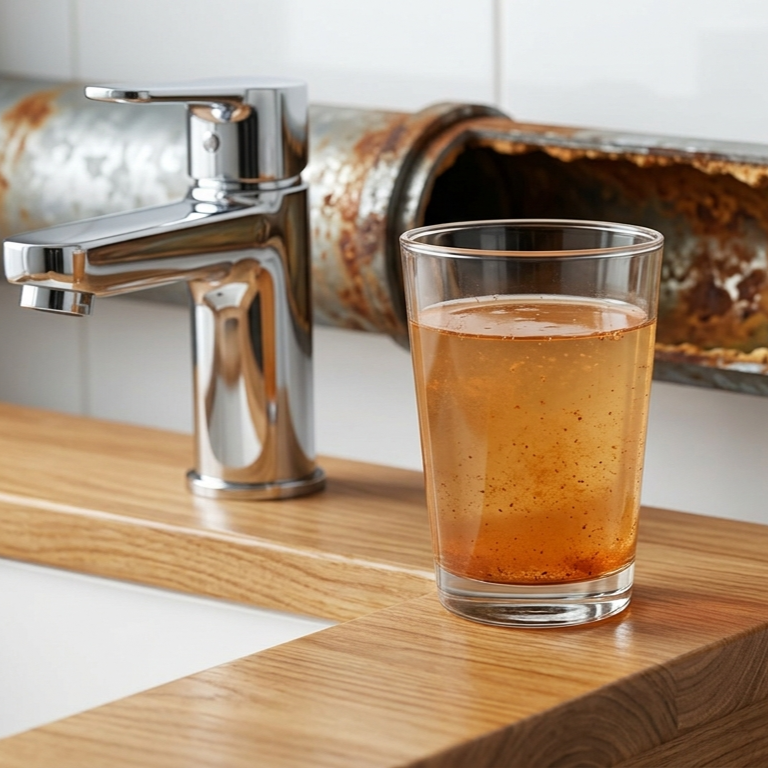
Quick Answer: Discolored water is a diagnostic clue, not a random event. Brown or rust usually means iron from corroding pipe or a rusting water heater. Yellow or tea points to tannins or manganese. Milky white is trapped air. Blue-green is copper corrosion. Black specks are manganese or a failing rubber part. The color tells you where to look; the pattern of which taps run dirty tells you what to fix.
You turn on the faucet expecting clear water and instead get a rusty brown stream, a yellow tint, or a glass that looks cloudy. It is unsettling, and the first question is always the same: Is this dangerous, and what is causing it? The good news is that the water itself is doing you a favor. The color is a signal, and each shade points to a different source. Once you learn to read that signal and combine it with a couple of simple checks, you can usually narrow the problem down to a single pipe, appliance, or fixture without guessing.
Color Is a Clue: What Each Shade Usually Means
Think of your plumbing the way a mechanic thinks about the color of oil on a dipstick. The fluid picks up whatever it passes through, so its color reports on the condition of the system it traveled through. Water works the same way. It arrives clear from the treatment plant, then flows through a service line, a water heater, household pipes, and a fixture before it reaches your glass. Whatever it collects along the route shows up as color.
Here is what the common shades typically indicate.
| Water color | Most likely cause | What it points to |
|---|---|---|
| Brown/rust/orange | Iron | Corroding steel or galvanized pipe, a rusting water-heater tank, or disturbed sediment in the main |
| Yellow/tea/amber | Tannins or manganese | Organic matter or minerals in the source water |
| Milky/cloudy white | Trapped air | Pressure and temperature changes, not contamination |
| Blue/blue-green | Copper corrosion | Acidic water eating at copper pipe, often with fixture staining |
| Black specks | Manganese or a failing rubber part | Mineral deposits or a degrading supply hose, flex line, or dip tube |
Brown or rust-colored water is the one people notice most, and it almost always comes down to iron. That iron can come from the inside of an old steel or galvanized pipe that is corroding, from a water-heater tank whose sacrificial anode rod has worn away and left the steel tank itself to rust, or from sediment and rust that got stirred up in the city main after a hydrant flush or a line break nearby. Yellow or tea-colored water usually means dissolved organic tannins or manganese rather than iron. Milky or cloudy white water is the least worrying of the group: it is trapped air, and you can confirm it in seconds. Blue or blue-green water signals copper corrosion, where slightly acidic water slowly dissolves copper pipe, often leaving teal stains on sinks and tubs. Black specks are usually manganese or bits of a rubber component breaking down inside the system.
The Isolation Test: Trace It to Hot, Cold, or One Fixture
Color tells you what the water picked up. Where it picked it up is a separate question, and you answer it by running a quick isolation test. This is the single most useful thing you can do before calling anyone, because it turns a whole-house mystery into a specific location.
Start with three questions.
Is it only the hot water? Fill a glass from the cold tap and another from the hot tap at the same sink. If only the hot side is discolored, the water heater is almost certainly your source. The tank is where iron accumulates as the anode rod fails and the steel starts to rust, and where sediment settles and gets kicked up when the burner or element heats the water. Cold water bypasses the tank, so it stays clear.
Is it the cold water, too, or every tap in the house? If the cold water is discolored, or the problem occurs at every faucet, the source is upstream of the house: the service line bringing water to your home, the city main, or an aging supply line. This is the pattern you see when galvanized supply lines are rusting from the inside, which is a genuine cause in older homes where those pipes have been in the ground or the walls for decades.
Is it only one faucet? If a single fixture runs discolored while the rest of the house is clear, the problem is local: that faucet's aerator, the flexible supply lines under that sink, or a short run of pipe feeding it. Unscrew the aerator, and you will often find it packed with rust flakes or grit.
There is a fourth pattern worth knowing. If the discoloration appeared suddenly throughout the house right after you saw a utility crew working on the street, a fire hydrant being flushed, or a water main repair, the cause is disturbed sediment in the main. That is temporary. It clears on its own once the stirred-up material settles and passes through.
Simple Tests You Can Run Before Calling Anyone
None of these requires tools beyond what is already in your kitchen.
Run the cold tap for a few minutes- If discolored water clears after two to five minutes of running the cold side, you were most likely flushing out sediment that settled in the pipes or came in from the main. If it runs dirty indefinitely, no matter how long you let it go, the source is ongoing rather than settled debris.
Fill a clear white container- A white cup or bowl gives you an honest read on the color that a stainless sink hides. Let it sit for a minute. Iron often settles into an orange-brown layer at the bottom. Air-caused cloudiness does the opposite: it clears from the bottom up as the bubbles rise, and within a minute the glass is perfectly clear.
Check the hot side against the cold side deliberately- Do not eyeball it from memory. Fill both at once and set them side by side. This one comparison decides whether your water heater is in the picture.
Look at what the water is staining- Rust-colored streaks on laundry, orange rings in the toilet tank, or brown staining on white fixtures all confirm iron and tell you it has been present for a while, not just today.
Blue-Green, Milky, and Black: The Less Obvious Colors
The brown-water diagnosis covers most calls, but the other colors have their own logic worth spelling out.
Milky white water that clears from the bottom up is trapped air, full stop. It happens after work on the line, after the water sits under pressure, or seasonally as incoming water temperature shifts and dissolved air comes out of solution. It is not a contamination event and needs no repair.
Blue or blue-green water, or teal staining on a sink, tub, or shower, points to copper corrosion. Water that sits slightly on the acidic side slowly dissolves the inner wall of copper pipe, and the dissolved copper both tints the water and stains fixtures. Persistent blue-green staining is worth investigating because it reflects the chemistry of your water working against your pipes over time.
Black specks have two common explanations. The first is manganese, a naturally occurring mineral that oxidizes into dark particles. The second is a rubber part breaking down: the flexible supply hose under a fixture, a gasket, or the dip tube inside the water heater, which is the plastic or rubber tube that routes cold water to the bottom of the tank. When a dip tube degrades, it sheds small dark or gray flecks that appear at downstream fixtures. If the specks appear mainly on the hot side, the water heater is the prime suspect.
Is Discolored Water Safe?
For the most common causes, iron and manganese, discoloration is generally an aesthetic and nuisance issue rather than a health hazard. Iron will stain laundry and fixtures and can give water a metallic taste, but the levels that cause visible brown water are usually below what is considered harmful to drink. That is the general pattern, not a guarantee for your specific water, which is why a sudden and unexplained new discoloration is worth testing rather than assuming.
A few situations deserve more caution. If your local utility has issued a boil-water notice, follow it regardless of how the water looks. If discolored water arrives with a sewage or rotten smell, treat that as urgent and stop using it until the cause is identified. And as a plain rule: never drink water you are unsure about. If you want certainty, a laboratory or a certified test kit can check for coliform bacteria and lead, which are the results that matter for safety, and which color alone cannot tell you.
Hard, mineral-heavy water adds a wrinkle worth understanding. That mineral load, combined with high heat, pushes water heaters and pipe interiors harder than they would work in a milder, softer-water region. Hard water accelerates the wear on a sacrificial anode rod and encourages scale and sediment inside the tank, which is one reason rusty hot water is a recurring complaint in older tanks.
When to Test, Flush, or Replace
If the isolation test points to the water heater, the tank can usually be flushed to clear sediment, and the anode rod can be checked and replaced before the tank itself starts rusting. Anode rods are sacrificial by design: they corrode so the steel tank does not, and once they are used up, the tank is next in line. They are commonly inspected every few years, though how fast one wears out depends heavily on water chemistry and use.
If the isolation test points to the supply lines and you have an older home with galvanized pipe that is rusting from the inside, no flush will fix that permanently, because the corrosion is in the pipe itself. That is the point where repiping enters the conversation. Same with a water heater that runs rusty on the hot side even after a flush and a fresh anode: a tank that has begun to rust internally is on borrowed time.
The reassuring part is that you rarely have to jump straight to replacement. The color and the isolation pattern together tell you whether you are dealing with a temporary event, a fixture-level nuisance, a serviceable water heater, or an aging pipe that has reached the end of its life. Start with the color, confirm with the hot-cold-single-fixture check, and you will know which of those you are looking at.
Frequently Asked Questions
Bathing in water with a little iron is generally fine, though it can leave faint staining on a light-colored tub over time. Drinking is the more careful call. Iron and manganese discoloration is usually an aesthetic problem, not a toxic one, but color cannot reveal what actually matters for safety. If the discoloration is new and unexplained, have the water tested for coliform bacteria and lead through a lab or a certified kit, since those two contaminants are invisible and are the ones worth ruling out before you trust the tap again.
Cold water bypasses the water heater, so if only the hot side runs discolored, the tank is the source. Inside, sediment settles to the bottom, and the anode rod slowly corrodes away, after which the steel tank itself begins to rust. To clear built-up sediment, the tank can be drained and flushed: shut off the heater, connect a hose to the drain valve, and run water through until it comes out clear. If it still runs rusty after a full flush, the anode rod or the tank lining is likely the culprit and needs a closer look.
That timing points to disturbed sediment in the main, which is temporary. Run a cold tap for several minutes and let the stirred-up rust and minerals pass through; it usually clears within a few minutes to a few hours. Run the cold side rather than the hot, so you do not pull the debris into your water heater, where it will settle. Hold off on laundry until the water runs clear, because iron-laden water can leave rust stains on fabric that are difficult to remove.
Two culprits are common. Manganese is a natural mineral that oxidizes to fine, dark particles and tends to appear in both hot and cold water. The other is a degrading rubber or plastic component: a flexible supply line under a fixture, a worn gasket, or the water heater's dip tube, the internal tube that carries cold water to the bottom of the tank. A failing dip tube sheds gray or black flecks that appear mainly on the hot side. If you see specks only when running hot water, check the heater first.
It depends on the cause, and the two devices do different jobs. A sediment filter or a dedicated iron filter targets particulate rust and dissolved iron, which is what you want for brown water. A water softener is built to remove hardness minerals like calcium and magnesium, and while some units handle small amounts of dissolved iron, a softener is not designed to clear heavy iron or particulate rust and can foul if pushed to do so. Match the equipment to what your water test finds, rather than installing a softener and hoping it covers everything.
Replacement enters the picture when the source is the metal itself rather than loose debris. If cold water runs rusty in an older home with a galvanized supply pipe, the corrosion is inside the pipe wall, and no flush fixes it for good; repiping is the durable answer. For a water heater, if the hot side still runs discolored after a proper flush and a fresh anode rod, the tank has likely begun to rust internally and is nearing the end of its service life. A single dirty flush is not a death sentence, but persistent rust after servicing is the signal to plan a replacement.
Trace the source and get clear water back — book an inspection and stop guessing at what your pipes are telling you. American Discount Plumbing serves Phoenix and the Valley. ROC #150707. Call (602) 883-2787.