

Hidden Slab Leak? The Early Warning Signs to Catch
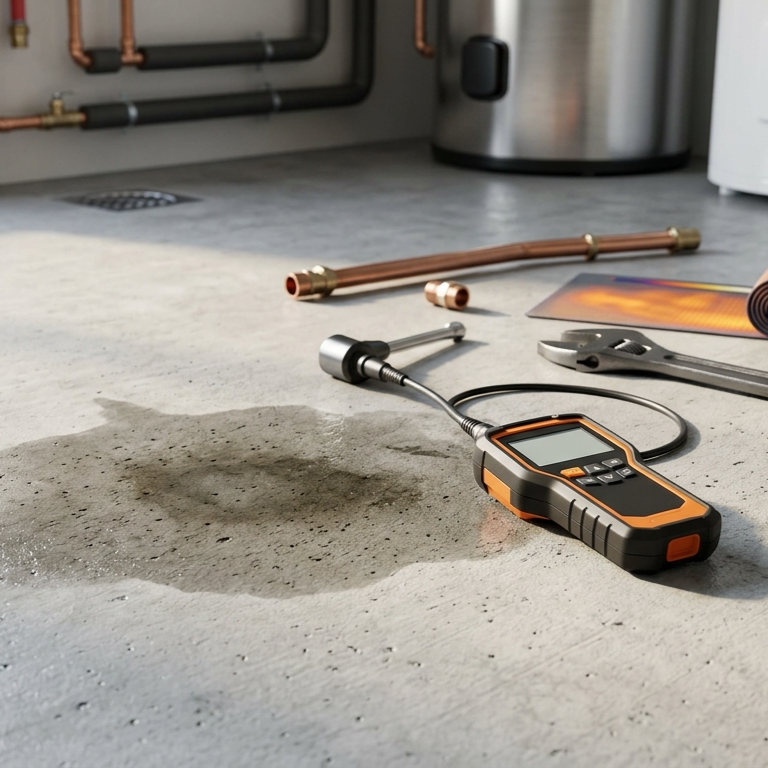
Quick Answer: A slab leak is a pipe leaking under the concrete foundation, and it often runs unseen for months. The early warning signs are a water bill that climbs with no change in use, the sound of running water when everything is off, warm or hot spots on the floor, unexplained damp or buckling flooring, a drop in water pressure, and a water meter that keeps moving with all fixtures shut. Catching these signs early matters because a slab leak under pressure can erode soil, crack the foundation, and feed mold. If you suspect one, shut off the water and have it located before the damage spreads.
A visible leak is a nuisance. A leak you can't see — running under the concrete slab your house sits on — is a different kind of problem, because it can do its damage for months before anything obvious shows up. Knowing the early signs lets you catch a slab leak while it's still a repair and not a foundation emergency.
What a Slab Leak Actually Is
Many homes are built on a concrete slab foundation, with water and sometimes drain lines running through or beneath that concrete. When one of those pressurized pipes develops a leak — from corrosion, abrasion against the concrete, shifting soil, or a manufacturing flaw — water escapes under the slab. Because it's hidden beneath solid concrete, you don't see a puddle. Instead, the water has to go somewhere, and the clues it leaves are indirect.
That hidden nature is exactly why slab leaks are dangerous. A faucet drip announces itself; a slab leak whispers. The earlier you learn to read the whispers, the less damage it does.
The Bill and the Meter
One of the first and most reliable signs is a water bill that rises even though the amount of water you use doesn't change. A pressurized pipe leaking continuously under the slab adds gallons every hour, and that shows up on the bill before it shows up anywhere else.
You can confirm it at the meter. Turn off every water-using fixture and appliance in the house, then watch the meter. If it's still turning — or the leak indicator is spinning — water is moving somewhere it shouldn't be. That single test is one of the clearest at-home checks for a hidden leak.
What You Hear and Feel
A slab leak often makes itself known through sound and temperature. With the house quiet and the water off, you may hear running or rushing water inside a wall or under the floor. That sound of water moving when nothing is on is a strong indicator.
Temperature is another tell. If the leak is on the hot water line, the escaping hot water can warm a section of the floor. A warm or hot spot on a tile or concrete floor — especially one that has no business being warm — often indicates a hot water slab leak. Some people first notice it when walking barefoot.
| Warning sign | What it suggests |
|---|---|
| Bill rises, usage unchanged | Continuous hidden leak |
| Meter moves with water off | Active leak somewhere in the system |
| Sound of running water when quiet | Water escaping under slab or in wall |
| Warm spot on the floor | Hot water line leaking below |
| Damp, buckling, or stained flooring | Moisture rising through the slab |
| Drop in water pressure | Pressure lost to the leak |
What You See Over Time
As a slab leak continues, moisture works its way up through the concrete and into your flooring. You might see damp patches on carpet, tile that lifts or sounds hollow, hardwood that buckles or cups, or staining that spreads for no clear reason. A persistent musty smell can develop where the moisture feeds mildew. Cracks may appear in the flooring or walls as the wet soil beneath the foundation shifts. By the time these show up, the leak has usually been running a while — which is why the bill, meter, and sound clues are so valuable for catching it sooner.
Why Early Detection Is Worth It
A slab leak doesn't stay the same size. Water under pressure erodes the soil supporting the foundation, and that loss of support can lead to settling and foundation cracks. The constant moisture invites mold and can ruin flooring throughout a room. What starts as a pinhole in a pipe can end as a major repair to concrete, flooring, and structure. Acting at the first signs keeps the problem contained to the plumbing rather than letting it reach the foundation.
If you find a warm, wet spot on the floor along with the sound of running water and a moving meter, treat it as an active slab leak. Shut off the main water supply to stop the flow and have the leak located before more water undermines the slab.
What to Do If You Suspect One
If the signs point to a slab leak, the first step is to shut off the main water supply to prevent further damage. From there, locating the leak precisely matters — a professional uses electronic listening equipment and pressure testing to pinpoint it under the concrete without tearing up the whole floor. Once it's located, the repair can be targeted. The worst thing to do is wait and hope, because a slab leak only grows, and the surrounding damage compounds the longer it runs.
Frequently Asked Questions
Often, it's a water bill that rises without any change in your usage, since the leak adds water continuously. Close behind are the sounds of running water when everything is off and a water meter that keeps moving with all fixtures shut. These appear before visible floor damage, which makes them the most useful early signals.
You can do a basic check. Turn off every fixture and appliance that uses water, then check your meter — if it's still moving, water is leaking somewhere. You can also listen for running water in a quiet house and feel for warm spots on the floor. Pinpointing the leak under the slab, though, requires professional equipment.
Not always, but it's a common sign of a hot water slab leak. Escaping hot water heats the concrete above it, creating a warm patch where there shouldn't be one. If you also notice a higher bill, running water sounds, or a moving meter, a slab leak becomes the likely explanation and is worth investigating.
It can be very serious if ignored. Water under the foundation erodes the soil that supports it, which can cause settling and foundation cracks, and the constant moisture damages flooring and feeds mold. Caught early, it's usually a contained plumbing repair. Left to run, it can become a structural problem.
Because it leaks continuously under pressure, 24 hours a day, unlike a faucet you turn off. Even a small pipe leak adds up to many gallons over a billing cycle, so the bill can jump noticeably while your actual usage hasn't changed at all. That gap between usage and cost is a key clue.
Shut off your main water supply to stop the flow and limit the damage, then have a professional locate the leak. Precise detection avoids unnecessary demolition, and a targeted repair addresses the leak before it undermines the slab. Don't wait for the damage to get worse — a slab leak doesn't resolve on its own.
Catch It While It's Still a Pipe Problem
A slab leak hides under concrete and can run for months, so the early signs — a creeping bill, a moving meter, the sound of water when it's quiet, and warm or damp spots on the floor — are your best chance to catch it before it reaches the foundation. If those signs line up, shutting off the water and quickly locating the leak can prevent a hidden pipe problem from becoming a structural one.
Suspect a hidden leak under your slab — Get it located with electronic detection before it undermines your foundation. American Discount Plumbing serves Phoenix and the Valley. ROC #150707. Call (602) 883-2787.